Field of Science

  • in Sex, Genes & Evolution
  • in History of Geology
  • in The Greenhouse
  • in The Curious Wavefunction
  • in Variety of Life
  • in Labs
  • in Games with Words
  • in Disease Prone
  • in Chinleana
  • in The Astronomist
  • in Skeptic Wonder
  • in Genomics, Medicine, and Pseudoscience
  • in inkfish
  • in Life of a Lab Rat
  • in RRResearch
  • in The Phytophactor
  • in Doc Madhattan
  • in Rule of 6ix
  • in The View from a Microbiologist
  • in Angry by Choice
  • in Memoirs of a Defective Brain
  • in The Biology Files
  • in Moss Plants and More
  • in Pleiotropy
  • in C6-H12-O6
  • in Catalogue of Organisms
  • in PLEKTIX
  • in A is for Aspirin
  • in Field Notes
  • in The Culture of Chemistry
  • in The Large Picture Blog
  • in Protein Evolution and Other Musings

Extract DNA in your kitchen

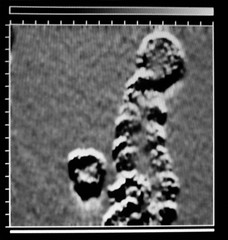
When my kids think of DNA, they think of the classic picture of the double helix. But what does DNA really look like? A lot depends on how you look at it, and since most of us don't have a good scanning tunnelling microscope at home, we can't get pictures that look like this one from Lawrence Berkeley Labs.

.

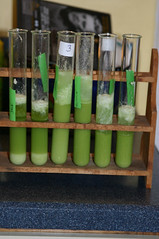
With a bit of patience, you can extract DNA in your kitchen, and see what the long polymer strands look like in the aggregate! The Genetic Science Learning Center at the University of Utah has developed a protocol for extracting DNA from split peas. Last summer my kids and several of their friends spent a morning in our kitchen pureeing peas and extracting the DNA. The white threads at the top of each test tube are the DNA. A great rainy day project - even if you don't have kids.
1 comment:


Markup Key:
- <b>bold</b> = bold
- <i>italic</i> = italic
- <a href="http://www.fieldofscience.com/">FoS</a> = FoS