Field of Science

The University Senate is not a Bath House


Mathematical Physics Seminar: Professor Hilbert, with the assistance of Dr E Noether, Mondays from 4-6, no tuition.

Winter 1916-17 catalog, University of Gottingen


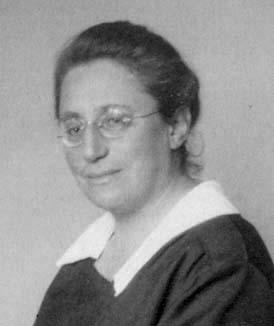
Emmy Noether was one of the greatest mathematicians of the 20th century - indeed of any century. Born in 1882 in Erlangen, Germany, where her father was a professor of mathematics at the university, she is known for her work in ring theory and non-commutative algebras. Her work in the theory of invariants proved essential to Einstein in formulating his general theory of relativity. In the late 19th and early 20th century, women were not permitted to officially matriculate at German universities, though they could petition individual professors to attend their classes. Noether attended courses at Erlangen, then at Gottingen, receiving her Ph.D. from Gottingen in 1907. She returned to Erlangen to assist her father, but continued her own mathematical work (much of which was published in the papers of others). In 1915, Hilbert (yes, real analysis and quantum afficiandos, that Hilbert - of Hilbert space) persuaded her to return to Gottingen. Though Gottingen refused to appoint her officially to the faculty there until 1919, Noether taught courses by having them advertised under Hilbert's name. Hilbert argued strongly for Noether's addition to the faculty, famously proclaiming, "I do not see that the sex of the candidate is against her admission as a Privatdozent. After all, the university senate is not a bathhouse."

In 1933, she fled Nazi Germany, accepting a visiting position at Bryn Mawr College. She died at Bryn Mawr Hospital in 1935; her ashes are buried in the Cloisters at Bryn Mawr.

Quantum Chemistry in the Time of Cholera


Slate magazine notes that occasional cases of cholera have been reported in the Gulf states, suggesting that the bacteria Vibrio cholerae is alive and well in that area. Recently, a group at Universtiy of Washington [O'Neal, Claire J., Jobling, Michael G., Holmes, Randall K., Hol, Wim G. J.
"Structural Basis for the Activation of Cholera Toxin by Human ARF6-GTP"
Science 2005 309: 1093-1096]has used x-ray crystallography to probe how the cholera toxin provokes such massive diarrhea when it takes up residence in the human gut. A figure from the paper shows how the overall 3-dimensional structure of the toxin changes when an activator protein binds to it. Protein chemists use the term "allosteric" to describe these mechanisms.

The picture is what interests me. I lectured on Monday about the probability density that you can compute using quantum mechanics (ψ*ψdτ). You can also measure the density experimentally using x-ray techniques, as Hol's group did for the cholera toxin. These sorts of pictures don't actually show the full density function, but a surface of constant electron density, usually around .002 e/bohr3, which seems small. A bohr is very small (0.529 x 10⁻¹⁰ )meters, so this corresponds to about one mole of electrons (on the order of 1023!) per cubic inch. This sounds like a lot, until you realize it's about the same as the number of electrons in a teaspoon of water!

That the Programmer may Return to being a Mathematician

The solution of differential equations has taken on an entirely new dimension in the 75+ years since Erwin Schrodinger proposed approaching the description of matter waves using PDEs. The solution of many differential equations can now be found numerically, using computers. Grace Hopper, who graduated with a BA in math from Vassar, a women's college, in 1928. She worked on her doctorate in math at Yale and returned to Vassar as a professor of mathematics in 1931. During WW II she joined the waves and was assigned to the team running the Mark I - an early digital computer. Her work there eventually led her to design the first compiler - a translator which turns the "natural" language of the programmer into the binary code that the computer can read. Hopper hoped that then "the programmer may return to being a mathematician." The development of widely used symbolic algebra programs such Mathematica and Maple can be traced to Grace Hopper's work. Legend has it that Grace Hopper is the one who coined the term "bug" for problems with a computer, after pulling a moth out of one of the machines.

Unnatural Amino Acids

Thirty years ago, it was assumed that all amino acid residues in naturally occurring polypeptides were in the L-form. We now know there are a few exceptions. For example, some polypeptide antibiotics found in fungi incorporate D-amino acids. It is thought that in most cases the peptide is synthesized with all L-amino acids, subsequently individual amino acids undergo enzymatically catalyzed epimerization. Only one such epimerase has been identified to date. The serine epimerase found in the venom of the funnel web spider, Agelenopsis aperta, selectively inverts the configuration of Ser-46 of the substrate omega-agatoxin-TK, leaving the other serine residue at position 28 untouched.

Oure termes so lerned and queynte

Whan we be ther where we shul exercise
Oure elvish craft, we seme wondrous wyse,
Yet wil I telle them, as they come to mynde,
Though I can not them set right in their kind;
As sal armoniak, verdegres, boras;


Geoffrey Chaucer, "The Canon's Yeoman's Tale" in The Canterbury Tales

Protein chemistry seems like a hot area, but the name given to the basic building blocks of proteins - amino acids - is in fact quite "queynte".

Chaucer's junior alchemist tries to impress the other pilgrims on the road with his knowledge of the terms of his "elvish craft", treating fellow-travelers to a free-associating litany of chemical names, herbs and equipment. Some terms remain familiar to modern chemists, who still ply their trade with vials and crucibles and can pull potassium carbonate off their shelves, others have left their traces in the learned terms of today. Traditionally, the earliest known production of what Chaucer calls "sal armoniak", or ammonium chloride, was from the burning of camel dung in the temple of Jupiter Ammon in what is now Libya – hence "sal ammoniac" or salt of Ammon. This term is the root for "amine" and eventually "amino acid".


See the whole Chaucerian litany in either Middle English or Modern English here. Want the full medieval experience? Images of the full text of two 15th century versions can be found here. You can read the Canon's Yeoman's Tale in (almost) it's original form thanks to the British Library.

Walking the tightrope: finding the timeless fundamentals in the context of modern physical chemistry

Today was a busy day, I gave another talk at the American Chemical Society meeting. This talk highlighted the ever present tensions in the physical chemistry curriculum between the expanding scope of modern physical chemistry and the timeless fundamentals. It was well summed up by one of my predecessors at Bryn Mawr - in 1913:

“The contributions to knowledge in the domain of physical chemistry have increased with such rapidity within recent years that the prospective author of a general textbook finds himself confronted with the vexing problem of what to omit rather than what to include.” - Frederick H. Getman, 1913


Can the curriculum be updated to include modern examples without compromising the basics? The NSF grant mentioned in my profile is for a new set of materials for teaching introductory physical chemistry that tries to bridge this gap. The materials draw from the recent primary research literature to illustrate key principles in multidisciplinary contexts. For example, the kinetics of first order reactions, illustrated in many current texts by a paper from 1921 reporting the rate of decomposition of gaseous N2O5, can be covered instead by following the racemization of amino acids used in the last decade to date archeological samples.

Resources mentioned in the talk, which I promised to post here are:

Talk less, they learn more


  • Using the pause procedure to enhance lecture recall. [Ruhl, K. L., Hughes, C. A., & Schloss, P. J. (1987, Winter). Teacher Education and Special Education, 10, 14-18]
  • The importance of lecture in general-chemistry course performance [Birk, J.P., Foster, J. (1993) J Chem Ed 70 179]
  • Departing from Lectures: An Evaluation of a Peer-Led Guided Inquiry Alternative [Lewis, S.E., Lewis, J.E. (2005) J Chem Ed 82 135]
  • From Traditional to Radical [J. N. Spencer, Thought and Action, The NEA Higher Education Journal, XVII, No. 2 Winter 2001-2002]
  • A Guided Inquiry Chemistry Course [J. J. Farrell, R. S. Moog, J. N. Spencer, J. Chem. Educ. 1999, 76, 570-574

Do less, they learn more

  • Effects of lecture information density on medical student achievement [Russell. I.J., Hendricson, W.D., & Herbert, R.J. (November, 1984). Journal of Medical Education, 59, 881-889]

Other resources:

  • POGIL:Physical Chemistry: A Guided Inquiry: Atoms, Molecules, and Spectroscopy, R. S. Moog, J. N. Spencer, J. J. Farrell; Houghton Mifflin: Boston, 2004.
  • Physical Chemistry Online: Chem. Educator, 5 77-82 (2000) Deborah Sauder,* Marcy Towns, Betty Derrick, Alexander Grushow, Michael Kahlow, George Long, Danny Miles, George Shalhoub, Roland Stout, Michael Vaksman, William F. Pfeiffer, Gabriela Weaver, and Theresa Julia Zielinski
  • Physical Chemistry in Context
  • SymMath archive at Journal of Chemical Education

Replacing the Blackboard: Using Mathematica to Teach Modern Chemical Kinetics

In a talk I gave today at the American Chemical Society fall national meeting, I argued that moving the teaching of physical chemistry beyond what can be done on the blackboard or with pencil and paper can alter not only course pedagogy, but profoundly change course content. Analytical solutions to the differential rate equations often receive the bulk of the attention in an introductory physical chemistry course. Does this reflect the current practice in the field? Should this be the emphasis students take away? I think not. In response I developed a Mathematica based document for teaching chemical kinetics which builds on the traditional framework of analytical solutions, but develops numerical methods in concert, rather than as a special topic and shows how these numerical methods can be used to explore more exotic reactions, such as those that oscillate, or even exhibit chaotic behaviors.

Resources mentioned in the talk, which I promised to post here are:

  • POGIL:Physical Chemistry: A Guided Inquiry: Atoms, Molecules, and Spectroscopy, R. S. Moog, J. N. Spencer, J. J. Farrell; Houghton Mifflin: Boston, 2004.
  • Physical Chemistry Online: Chem. Educator, 5 77-82 (2000) Deborah Sauder,* Marcy Towns, Betty Derrick, Alexander Grushow, Michael Kahlow, George Long, Danny Miles, George Shalhoub, Roland Stout, Michael Vaksman, William F. Pfeiffer, Gabriela Weaver, and Theresa Julia Zielinski
  • Physical Chemistry in Context
  • SymMath archive at Journal of Chemical Education
    Physical Chemistry, Metiu

Podcasting

Prompted by a talk last spring given by Jean-Claude Bradley of Drexel's chemistry department, I decided to try podcasting and webcasting my fall course. I submitted the podcast feed to Apple's iTunes, and wondered how many people outside of my course might be interested in listening. More than I might think, as Jean-Claude's post suggests.

So if you're intersted in following a quantum chemistry course, subscribe to the podcast through iTunes, or go to Chemistry221 where you can get both the podcast and a webcast.

Working up an appetite for momentum

This week we're "down the shore" as they say around here. We go to the same place each year and my kids have their traditional activities. For example, on the hottest day of the week we're there, we should rent a surrey (a pedicab with two seats and four sets of pedals -- this is not a light weight vehicle) and pedal it up and down the boardwalk for an hour, dodging pedestrians and other cyclists, until the parents (who provide most of the kinetic energy in this event) are soaked in sweat. The ride ends with a short ramp off the boardwalk, which this year Crash Kid was certain he could negotiate without parental assistance. Given his recent history with wheels, his parents were a bit less confident. The conversation quickly turned to momentum, and my spouse noted we had a lot of "m" in the buggy. My youngest thought this might stand for momentum. "Nope, that's 'p'!" his mom replied. Sensibly, he wanted to know why that letter!

Good question, and I'm not sure that I have a good answer for him yet. The lore seems to be that Newton used the term "impetus" in the Principia. Impetus is a Latin import, from petere to seek. Interestingly, the Indo-European root of petere is pter which gives us the Greek pteron (wing), and eventually helicopter. Petere is also the root of the English appetite -- which pedaling that surrey certainly worked up.

If anyone has other ideas about why "p" is used for momentum, I'd love to hear them!

Oil on the waters

Newsweek's Blogwatch highlights PZ Myers' Pharyngula blog and his altercation with George Gilder. While that post might have inflamed the blogosphere, the same issue considers a publication that recommends casting some calming "oil upon the waters".

A short text box highlights a recent paper (Barenblatt, Chorin, Prostokishin in PNAS Natl Acad Sci. 2005 Jul 27, pre-publication on web) by three mathematicians: "A note concerning the Lighthill "sandwich model" of tropical cyclones". The authors try to show that the maximum wind speeds that can be obtained above water depend on the turbulence of the flow. If you reduce the turbulence of the flow, the winds increase dramatically. They speculate that large water droplets thrown into the air reduce the turbulence and thus result in increased winds. The last paragraph of the article notes that in the distant past, sailors poured oil onto the waters to calm storms. Newsweek notes that a surfactant might work, and you might leave with the impression that oil is a surfactant.

Surfactants (from "surface active agents) reduce the surface tension of a liquid. When the surface tension is reduced, the size of droplets formed from the solution also decreases. So surfacants in theory could reduce the formation of large wind-blown droplets. Oil forms a physical barrier, since oil and water are immiscible, that prevents the water from being touched by the waves. Oil molecules are much heavier than water and less likely to form large stable droplets in the air. So both might work to calm a storm, but in chemically different ways.


My father spent much of his scientific career making surfactants. They see uses from the prosaic (read the back of your shampoo bottle, see something like sodium lauryl sulfate?) to the exotic (surfactants are used to treat premature babies' lungs).